
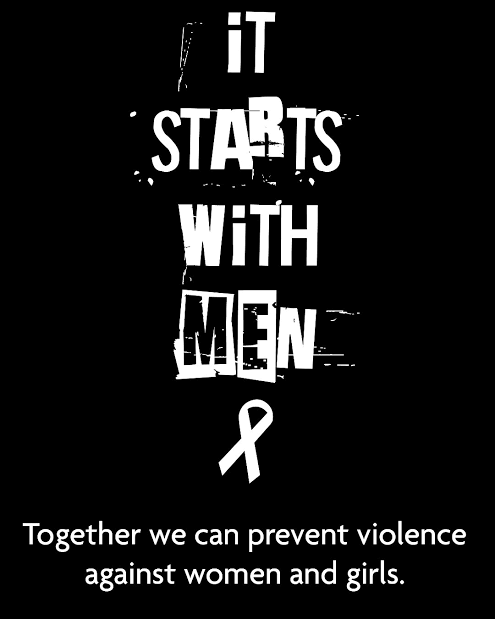
Gender-based violence. What do you hear when you read those words?
For many people, the phrase is still interpreted as a “women’s issue.” Similar reactions often occur when terms such as domestic violence, sexual harassment, violence against women, or workplace gender discrimination are used. Too often, the conversation is unconsciously filtered into a category that someone else should address.
But that’s part of the problem.
Several years ago, I watched a TED Talk by Jackson Katz that profoundly changed the way I think about these issues. His presentation, Violence Against Women: It’s a Men’s Issue, remains just as relevant today as when it was first delivered. Rather than attempting to summarize it, I encourage you to watch it for yourself.
Katz challenges us to reconsider how we frame gender violence. When we talk only about victims, we often overlook the responsibility of bystanders, leaders, peers, and organizations to prevent harmful behavior before it occurs (And Katz’svideo, unfortunately, has aged far too well on the Internet).
As we approach 2027, the need for that conversation remains urgent
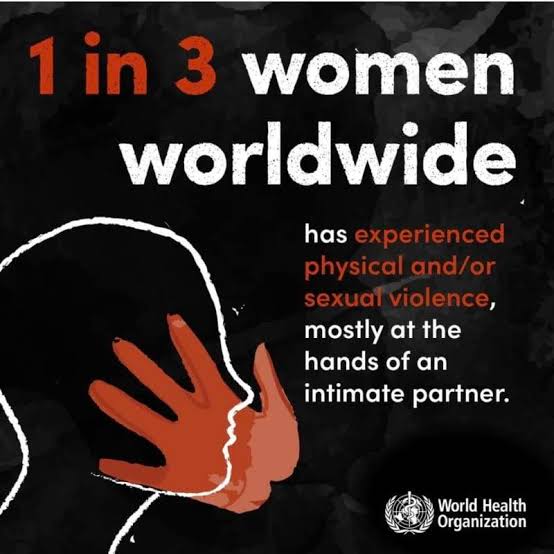
The World Health Organization (WHO) reports that approximately 840 million women and girls worldwide, nearly one in three, have experienced physical and/or sexual violence from an intimate partner or sexual violence from a non-partner during their lifetimes. WHO researchers note that this figure has remained largely unchanged over the past two decades, underscoring how slowly progress has occurred globally (World Health Organization [WHO], 2026). [who.int], [who.int]
According to the Centers for Disease Control and Prevention’s (CDC) most recent National Intimate Partner and Sexual Violence Survey, 34.0% of women (nearly 43.5 million women) and 17.0% of men (approximately 20.7 million men) have experienced contact sexual violence, physical violence, and/or stalking by an intimate partner during their lifetimes (Centers for Disease Control and Prevention [CDC], 2026b). [cdc.gov], [vawnet.org]
Among women, nearly one in five have experienced contact sexual violence by an intimate partner, nearly one in four have experienced physical violence by an intimate partner, and about one in eight have experienced stalking by an intimate partner. Among men, about one in seven have experienced physical violence by an intimate partner (CDC, 2026a). [cdc.gov]
The impacts extend far beyond the immediate incident
Nearly one in three women and about one in eight men report experiencing at least one significant consequence, including physical injury, missed work or school, concerns for personal safety, the need for medical care, or interactions with the criminal justice system.
The CDC also reports that approximately 16 million women and 11 million men first experienced intimate partner violence before reaching age 18 (CDC, 2026a; CDC, 2026b). [cdc.gov], [vawnet.org]
National advocacy organizations continue to estimate that nearly 20 people per minute are physically abused by an intimate partner in the United States, affecting more than 10 million Americans each year (National Coalition Against Domestic Violence, as cited in CPGN, 2026). [cpgn.org]
These numbers remind us that gender-based violence is not a distant social issue. It is a workplace issue, a public safety issue, a healthcare issue, a family issue, and a leadership issue. Every profession, every community, and every organization has a stake in creating cultures where respect, accountability, and safety are non-negotiable.
A Special Challenge for Those Who Serve Others
For those of us in Fire, EMS, law enforcement, healthcare, and the military, these numbers are particularly relevant. We routinely encounter the consequences of violence and trauma in the communities we serve. Yet we must also be willing to examine our own organizational cultures, policies, and leadership practices. Preventing harassment, discrimination, abuse, and violence is not simply an HR responsibility. It is a leadership responsibility.
In too many institutions, including the military, public safety organizations, Fire and EMS agencies, healthcare systems, corporations, and educational institutions, we continue to struggle with issues of harassment, discrimination, bullying, abuse of power, and gender-based violence. Significant progress has been made in many places, but progress is not the same thing as success.
Real cultural change occurs when people refuse to look the other way
As men, we have a particular responsibility to be active participants in creating respectful, professional, and safe environments. That means speaking up when inappropriate behavior occurs. It means challenging harmful attitudes. It means mentoring the next generation. And it means holding ourselves and our organizations accountable to the standards we claim to support.
This is not simply about protecting our wives, partners, sisters, daughters, mothers, friends, and colleagues. It’s about recognizing the dignity and value of every person.
If you’re a woman reading this, I encourage you to share this message with the people in your life who care about building healthier workplaces and communities.
If you’re a man reading this, I encourage you to watch Katz’s presentation, then watch it again. Take notes. Reflect on what it means for your workplace, your profession, your community, and your personal leadership. Then share it with other men.
The conversation around gender-based violence cannot be left solely to those who experience it. Lasting change requires all of us to participate. Cultural change occurs when ordinary people decide that silence is no longer acceptable, that respect is not negotiable, and that leadership requires action.
What are your thoughts? Have you seen examples of organizations taking meaningful steps to create healthier and more respectful cultures? Where do you think we still have work to do?
Leadership is ultimately measured not by the culture we inherit, but by the culture we choose to build.
I’d love to hear your perspective. Leave a comment below and join the conversation.
________________________________________
References
Centers for Disease Control and Prevention. (2026, August 19). About intimate partner violence. U.S. Department of Health and Human Services. https://www.cdc.gov/intimate-partner-violence/about/index.html
Centers for Disease Control and Prevention. (2026, February). The National Intimate Partner and Sexual Violence Survey (NISVS): 2023/2024 intimate partner violence data brief. National Center for Injury Prevention and Control, U.S. Department of Health and Human Services. https://www.cdc.gov/nisvs/media/pdfs/intimatepartnerviolence-brief.pdf
World Health Organization. (2026, June 18). Violence against women. https://www.who.int/news-room/fact-sheets/detail/violence-against-women

Join the conversation