
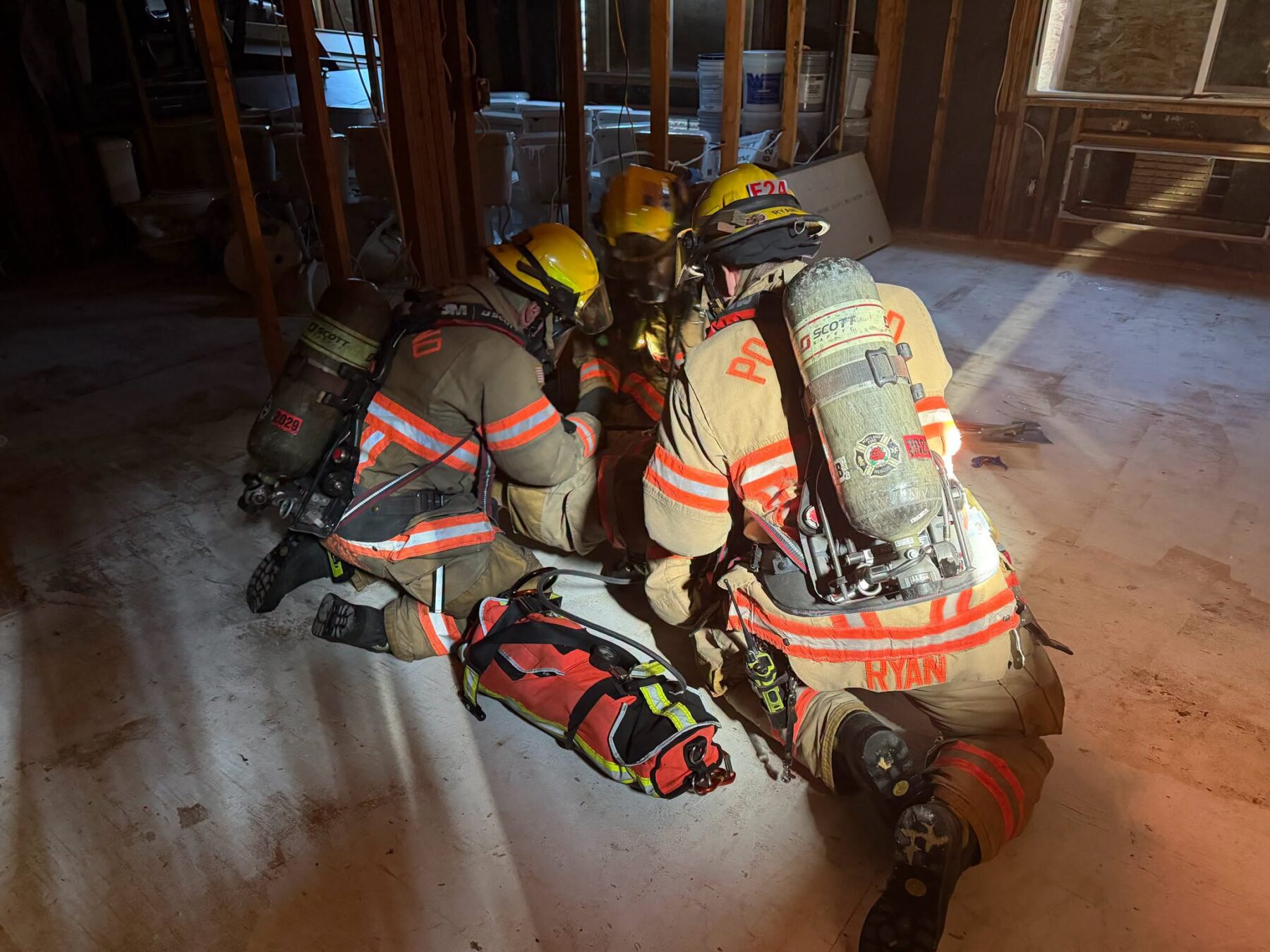
The Rapid Intervention Crew (RIC), sometimes referred to as a Rapid Intervention Team
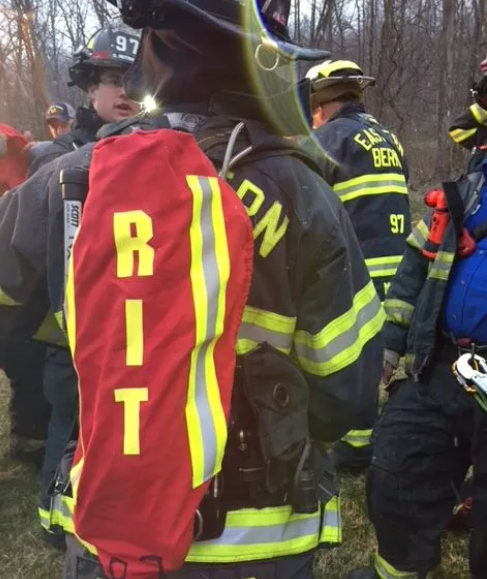
(RIT), has become an established and indispensable component of modern fireground operations. Once viewed by some as simply another task assignment for firefighters is now a critical risk-management function supported by standards, training programs, and decades of operational experience.
Today’s firefighters benefit from a variety of resources dedicated to firefighter survival and rescue, including NFPA 1407: Standard for Training Fire Service Rapid Intervention Crews, firefighter survival training programs, Mayday procedures, enhanced accountability systems, thermal imaging technology, and improved communications practices. Collectively, these advances have elevated the importance of RIC and reinforced its role as an essential element of incident operations.
This evolution is unquestionably positive. Every firefighter operating in an Immediately Dangerous to Life or Health (IDLH) environment deserves the assurance that a trained and equipped rescue team is standing by.
However, I continue to believe that RIC represents a reactive strategy for firefighter safety.
RIC exists for the moment when something has already gone wrong. A firefighter has become disoriented, trapped, separated from their crew, injured, or otherwise endangered. While a highly trained RIC can improve the chances of a successful rescue, deploying a RIC means that the incident has already experienced a significant breakdown in safety margins.
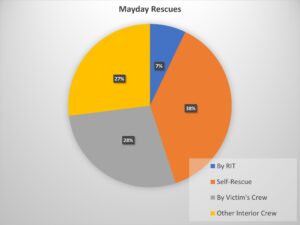
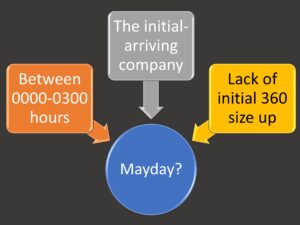
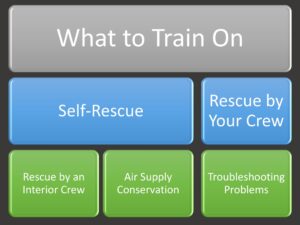
My source for the data in these photos is Project Mayday. Kudos to the late Don Abbott for creating a database focused specifically on mayday events and contributing factors. Today, the Project Mayday database and submission process are still online and accepting Mayday incident documentation. The site identifies CERT (Command Emergency Response Training) as the sponsoring organization and provides CERT contact information.
The challenge facing today’s fire service is the same challenge we faced years ago: firefighter rescue is extraordinarily labor-intensive.
Numerous studies, training exercises, and line-of-duty incident analyses have repeatedly demonstrated that rescuing a downed firefighter often requires far more personnel than many departments can immediately dedicate. Depending on building size, layout, fire conditions, victim location, and firefighter size and equipment, a rescue operation may consume multiple companies and a significant portion of available resources.
This reality is especially important for departments operating with limited staffing. In many communities, the personnel assigned as the initial RIC may be only a fraction of the resources needed to remove a firefighter from a hazardous environment. Once a mayday occurs, incident priorities shift dramatically, additional resources are required, and the complexity of the operation increases substantially.
Rather than viewing RIC as our primary firefighter safety strategy, we should view it as our safety net. The most effective firefighter rescue is the one that never becomes necessary.
Building Safety Through Proactive Fireground Behaviors
Reducing the likelihood of a firefighter emergency requires disciplined execution of proven fireground practices. While technologies and tactics continue to evolve, the fundamentals remain unchanged.
1. Risk Assessment Must Drive Tactical Decisions
The Incident Commander (IC) must continuously evaluate risk versus gain throughout the incident. Initial strategy should be based on a realistic initial—and ongoing—assessment of building conditions, fire behavior, staffing, occupant survivability, and available resources.
That assessment cannot remain static. Conditions change rapidly and those initial strategic objectives and operational modes must be adjusted as conditions warrant.
2. Every Incident Needs a Clear Action Plan
Successful incidents rarely occur by accident. The IC must establish, communicate, and continually update an Incident Action Plan that clearly identifies operational objectives, assignments, benchmarks, and expectations. Division and Group Supervisors must understand their responsibilities, available resources, and reporting relationships.
Confusion is the enemy of firefighter safety.
3. Accountability Is More Than a Passport System
Modern accountability must extend beyond tracking personnel tags or electronic systems. The IC and supervisors must maintain situational awareness regarding:
- Who is operating inside the hazard zone?
- What assignment they are performing?
- Where are they operating?
If a Mayday occurs, rescue efforts are heavily dependent upon quickly identifying the firefighter’s last known location, assignment, and intended objective. The quality of accountability directly affects the effectiveness of any rescue effort.
4. Communications Must Be Relentlessly Managed
Read the reports from NIOSH’s Fire Fighter Fatality Investigation and Prevention Program and a too common finding is that near misses and firefighter fatalities have involved communication failures. Not a failure of communications technology but a failure on the part of those using the technology.
The IC must maintain command presence and control of radio traffic. Supervisors must communicate concise, accurate, and timely updates. Firefighters must be disciplined radio users who understand emergency communication procedures and Mayday protocols.
During critical incidents, information can be as valuable as additional personnel.
5. Crew Integrity Saves Lives
Another factor frequently cited in those NIOSH reports are firefighter emergencies that began with a breakdown in crew integrity.
Fire companies or teams that enter the IDLH must remain together. Officers must always know the location and status of their members. Firefighters must resist the temptation to freelance, separate from their company, or continue operating after losing contact with their crew. Strong crew integrity remains one of the most effective firefighter survival tools ever developed.
6. Firefighter Survival Is Everyone’s Responsibility
Modern firefighter survival training emphasizes that every member has a role in preventing, recognizing, and responding to deteriorating conditions. Situational awareness, air management, emergency escape techniques, Mayday proficiency, and personal accountability all contribute to a safer operational environment. A successful rescue begins long before the Mayday is transmitted.
The Bottom Line
Every fire department should maintain a trained, equipped, and ready Rapid Intervention Crew. RIC is a critical component of firefighter safety and an operational necessity at incidents where firefighters are operating in hazardous environments.
But we should never allow the presence of a RIC to create a false sense of security.
The goal is not to become exceptionally good at rescuing firefighters. The goal is to prevent firefighters from needing rescue in the first place.
When sound risk assessment, disciplined command, accountability, communication, crew integrity, and firefighter survival practices are consistently applied, the best day for a RIC is the day it is never deployed.
Join the conversation