
By: Robert Avsec, Executive Fire Officer
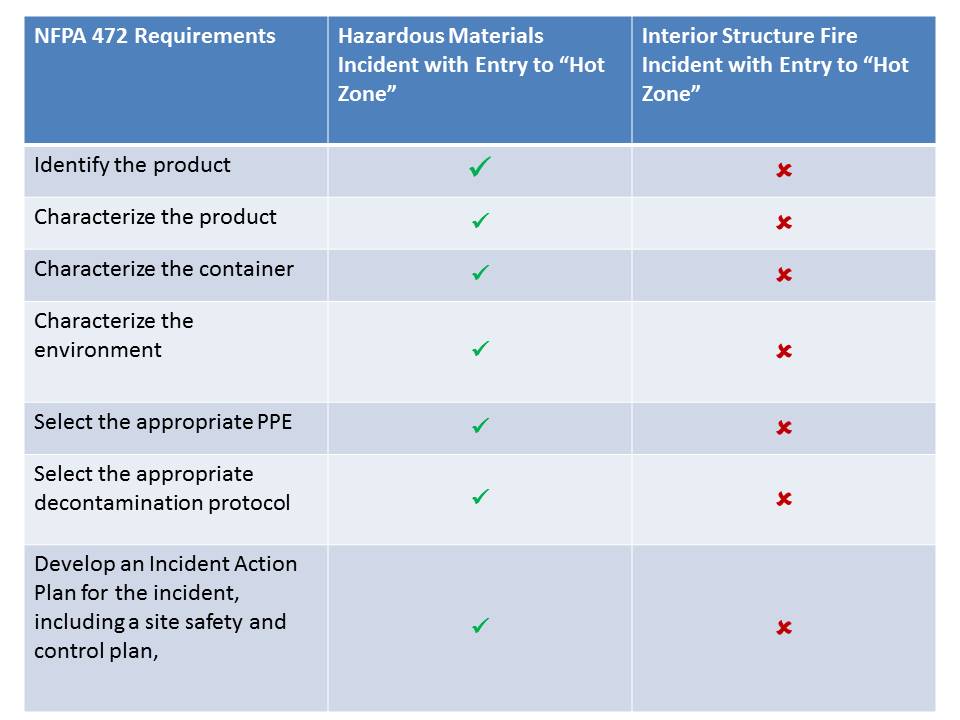
Note: There is no comparable NFPA standard that addresses Competence of Responders to a Structure Fire Incident.
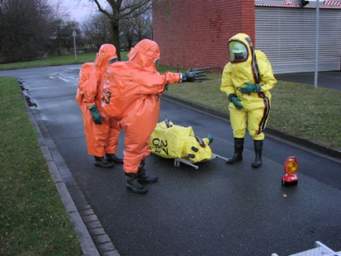
Consider two scenarios, if you will, involving a firefighter with additional training and certification to the Hazardous Materials Responder-Operations level who works for the same career or combination staffed department.
Scenario #1
Firefighter Griswald and his engine company are dispatched to a report of several individuals having difficulty 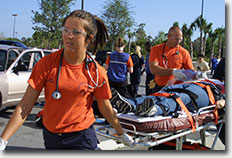 breathing at a local recreation center on a hot July afternoon. Upon arrival they encounter two recreation center staff members complaining of burning eyes and shortness of breath. They state that their symptoms started after they went into the pump/filtration area for the swimming pool after they heard what they described as a “small explosion.” To know about choices of repair, you could try here which is a informative site that hold key to every pipe issues.
The company officer orders Firefighters Griswald and Honeycutt to put on their structural PPE and SCBA to make entry into the affected area and report what they find. They do so and find that a portion of the chemical disinfection injection system had ruptured and that it appeared that liquid chlorine or some other liquid substance was all over the floor. While trying to get a better look at some labeling on the equipment, Firefighter Griswald slips on the wet floor and strikes his right knee on the main water line coming in from the pool. Griswald not able to get back on his feet, so Firefighter Honeycutt drags him out of the pump/filtration area.
Both firefighters experience exposure to the liquid chlorine (which is what the liquid was eventually identified as) on their structural PPE and received a gross decon washdown with from an 1 3/4″ hoseline. Griswald would be transported to the hospital by ambulance where he would be diagnosed with a fractured patella (kneecap). He would be out of work for about four weeks.
Scenario #2
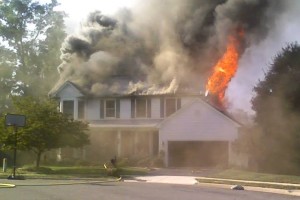 Firefighter Griswald and his engine company are dispatched to a report of a residential structure fire on a hot July afternoon. Upon arrival at a two-story, wood-frame single-family dwelling, the company officer reports heavy smoke conditions from second floor windows on sides B, A, and D; fire is showing from a 2nd floor window on side D.
Firefighters Griswald and Honeycutt are ordered to advance an 1 3/4″ hoseline to the second floor and find the seat of the fire and extinguish it. While advancing up the stairwell to the 2nd floor in moderately heavy smoke conditions, both firefighters are enveloped in flashover when a firefighter on the exterior takes our first-floor windows on side C.
Both Griswald and Honeycutt suffer 2nd and 3rd degree burns over more than 30 percent of their bodies following the catastrophic failure of their structural firefighting ensemble and SCBA caused by the flashover. Both were transported to the local trauma center for stabilization before being transferred to the regional burn center where they would stay for four months and six months respectively. Both would eventually return to duty more than a year after the original event that caused their injuries.
Today’s Question: For which incident is the department likely to face fines or other sanctions from the Occupational Health and Safety Administration (OSHA)?
References
National Fire Protection Association. NFPA 472: Standard for Competence of Responders to Hazardous Materials/Weapons of Mass Destruction Incidents.
United States Department of Labor. Hazardous Waste Operations and Emergency Response. 29 CFR 1910.120



For sure the pool scene. They went into an area without the right gear. However, the fire scenario left out (deliberately or not?) a back up team. In that case, the conditions are normal and expected for firefighters. What caused the flashover was someone not consider the consequences.
The question was which incident would be fined. The Hazmat incident or the structure fire- with scenario’s. The answer is Hazmat every time regardless. Municipalities are cited not fined. The post is intending to put into prospective some of the unnecessary risks of interior structure firefighting, However I be-leave it is a necessary risk that needs to be handled by a competent leader who must make that judgment call with an Informed opinion based on the variables on scene, and if that leader is negligent than that leader should be accountable.